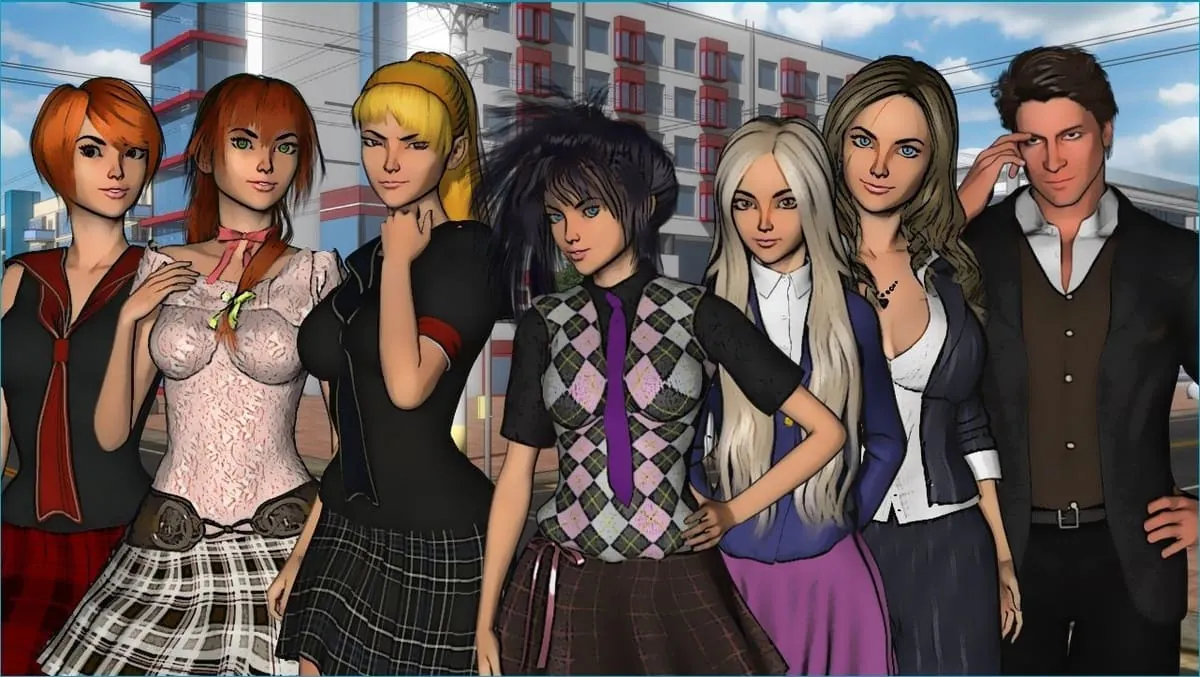
Something to Write About: The Author
Play Something to Write About: The Author
Something to Write About: The Author Screenshots






Something to Write About: The Author review
Complete Overview of Gameplay, Features, and Interactive Storytelling Experience
Something to Write About: The Author stands out as a unique interactive storytelling experience that blends creative writing with immersive gameplay. Developed by STWAdev, this Ren’py-based game invites players into a narrative-driven adventure where your choices directly shape the story’s progression. Whether you’re drawn to character-driven narratives, branching storylines, or text-based interactive fiction, this game offers a distinctive approach to digital storytelling. In this comprehensive guide, we’ll explore what makes this interactive experience compelling, how the gameplay mechanics work, and what you can expect from the narrative journey.
Understanding the Core Gameplay Experience
Ever found yourself shouting at a character in a movie, telling them exactly what they should have said? 😤 That frustrating feeling of seeing a story unfold in a way you wouldn’t have chosen is completely flipped on its head in Something to Write About: The Author. This isn’t about watching a tale; it’s about weaving it yourself, word by word, choice by choice. Welcome to the heart of a true interactive storytelling game, where your creativity is the primary controller and every sentence you craft writes the next page.
Forget menus, forget dialogue wheels. Here, you engage with pure text-based gameplay mechanics. It’s you, a narrative prompt, and a blank space to type your heart out. The magic lies in how the game’s engine listens to your intent, weaving your written words directly into the fabric of the story. This creates a uniquely personal and powerful form of player-driven story progression. You’re not just selecting a path; you’re inventing it, making the connection between your mind and the digital world feel astonishingly direct.
### How the Interactive Storytelling Mechanics Work
So, how does this sorcery actually function? 🪄 Imagine the game as a brilliant, responsive co-author. It sets the scene—perhaps you’re at a tense book signing, or having a quiet coffee with one of the story’s compelling characters—and then it poses a question, a scenario, or a pivotal “what if.” Your job isn’t to click “A” or “B.” It’s to think, “What would I do?” and then describe it.
The system is designed to interpret your language. Typing “I try to defuse the situation with a joke” sends the narrative down a different alley than “I stand my ground firmly.” This is the core of its text-based gameplay mechanics. It’s about branching narrative choices expressed through your unique voice. The game recognizes emotional tones, intentions, and actions, allowing for a staggering variety of inputs. One playthrough, I decided my author-character would be charmingly self-deprecating in an interview; the game ran with it, leading to a series of flustered but endearing reactions from the reporter. Another time, I played him as arrogant, and the entire tone of the scene turned cold and competitive.
This process creates a beautiful, collaborative loop: the game presents, you propose, and the story evolves. It’s this dynamic that makes Something to Write About: The Author more than a game—it’s an interactive storytelling game workshop for your imagination. You’re constantly engaged in a dance of cause and effect, watching as your typed decisions shape every emotional beat and turning point.
To see how all these pieces fit together in the player’s journey, let’s break it down:
| Player’s Role & Input | Game’s Narrative Tools | Resulting Experience |
|---|---|---|
| Writing creative responses to prompts | Dynamic text interpretation & scenario generation | A deeply personalized story that feels self-authored |
| Making key moral & strategic decisions | Complex branching logic and flag systems | Authentic narrative consequences and outcomes that diverge wildly |
| Investing in character interactions | Relationship meters and memory systems | Meaningful relationship building mechanics that evolve over time |
| Exploring different personality approaches | Responsive character dialogue and plot adjustments | A rich character development system for both the protagonist and NPCs |
### The Role of Player Choices in Story Progression
In most games, a choice might change the next line of dialogue. In this interactive storytelling game, a choice can rewrite a character’s motivation, alter the political landscape of the publishing world, and determine who trusts you by the final chapter. This is the weight of player-driven story progression. There’s no “right” answer, only your answer, and the story remembers everything.
Let’s talk about narrative consequences and outcomes. They aren’t always immediate. A seemingly minor choice in Chapter 2—like how you handle a sensitive question about a rival author—can resurface in Chapter 6, when that same rival either undermines you or offers a crucial hand of help. The game tracks your reputation, your alliances, and your personal ethos. This creates a chain of branching narrative choices where the branches themselves sprout new, unexpected limbs.
Tip: Don’t think of choices in isolation. Think of your playthrough as building a character’s biography. Every decision is a trait, a habit, a remembered moment that defines who you are in this world.
Here’s a concrete example from my own playthrough that illustrates this web of cause and effect beautifully. Early on, I met Elara, a sharp and idealistic literary critic. The game presented a prompt where she challenged my views on commercial fiction versus art.
-
My Choice Path A: I typed a long, thoughtful defense of accessible storytelling, aiming to find common ground. The game interpreted this as respectful and open-minded.
- Immediate Outcome: Elara was surprised and intrigued. Our debate became a lively discussion.
- Ripple Effect: Later, she referenced this conversation, offering me a heads-up about a negative review from a colleague. This opened a side-plot where I could address the critique publicly.
- Long-term Consequence: By the finale, this foundation of mutual respect meant she was a steadfast ally, influencing one of the more hopeful endings.
-
My Choice Path B (on a replay): I leaned into my character’s ego, typing a dismissive and sarcastic retort about critics who “don’t understand true art.”
- Immediate Outcome: Elara’s demeanor turned icy. The conversation ended abruptly.
- Ripple Effect: She later published a scathing piece about my “arrogance,” which lowered my public reputation stat and made other characters more wary of me.
- Long-term Consequence: In the endgame, she was a vocal opponent, closing off certain narrative paths and directly contributing to a more isolated ending for my character.
This single interaction showcases the depth of the branching narrative choices. It wasn’t just about +1 or -1 to a relationship meter; it was about defining a philosophical stance that the world reacted to consistently. The game features nine potential endings, and they are reached through the accumulation of hundreds of these nuanced decisions. Will you be a celebrated bestseller, a respected artist, a controversial figure, or a forgotten name? The keyboard is yours.
### Character Development Through Your Decisions
This brings us to the soul of the experience: the character development system. And I’m not just talking about the six beautiful, complex women you’ll meet—the aspiring novelist, the ambitious agent, the enigmatic fan, and others—each with her own dreams, fears, and narrative arc. I’m talking about your development, and theirs in response to you.
The protagonist isn’t a silent cipher. He is defined entirely by your words. Choose to be principled, and the game will present opportunities to stand up for your beliefs. Choose to be opportunistic, and shadier paths will open up. This is character development system in its purest form: you are not watching a arc unfold, you are performing it in real-time through your decisions. Your author’s personality, from his humor to his temper, is built sentence by sentence.
Of course, your evolution is mirrored in your relationships. The relationship building mechanics here are sublime. They aren’t about gifting the right item or choosing flirtatious options. They are built on consistency, empathy, and shared history. Remembering a small detail someone mentioned weeks ago (in-game) and referencing it can deepen a bond more than any grand gesture. Betray a confidence for short-term gain, and watch as trust evaporates, potentially locking you out of that character’s personal questline entirely.
Keeping track of this intricate web is where the Status/Info screen becomes your best friend. 📖 This isn’t just a menu; it’s your journal, your relationship ledger, and your strategic guide. Here you can see:
* The state of your connections with each character, often reflected in descriptive text rather than just a number.
* Key plot flags you’ve triggered (e.g., “Elara: Challenged Philosophy” or “Unlocked Rival’s Backstory”).
* Your current public and professional reputation.
This screen crystallizes the narrative consequences and outcomes of your journey, allowing you to see the tangible impact of your player-driven story progression. It turns abstract feelings into a visible map of your story’s direction.
Ultimately, the true magic of Something to Write About: The Author is the emotional discovery. The relationships you build—or break—feel earned. They stay with you after you close the game. That bittersweet ache of a friendship that faded due to your ambition, or the warm satisfaction of a partnership that flourished because of your loyalty, is a testament to the power of its interactive storytelling game design. You’re not just told a story about an author; you live the profound, messy, and exhilarating experience of becoming one, with all the creative power and personal responsibility that entails. Your story, your words, your legacy—it’s all waiting in that blank text box. ✍️
Something to Write About: The Author represents a compelling entry into interactive storytelling games, offering players a unique blend of creative decision-making and narrative immersion. The game’s strength lies in its character-driven approach, where your choices genuinely matter and shape the relationships you build throughout the experience. With 9 potential endings, multiple character paths, and a focus on emotional storytelling rather than action sequences, the game appeals to players seeking meaningful interactive fiction. Whether you’re interested in exploring the protagonist’s journey of recovery, developing relationships with the six main characters, or experiencing how your decisions create divergent story outcomes, this game delivers a personalized narrative experience. The combination of engaging gameplay mechanics, rich character development, and branching storylines makes it a standout choice for fans of interactive narrative games. If you’re drawn to story-focused experiences where your creativity and choices directly influence the outcome, Something to Write About: The Author offers an immersive adventure worth exploring.